Content Marketing

  • Create a winning content marketing plan with these three questions

    Creating content can be a total minefield if you don’t have a content marketing plan in place. You’ll likely create content on the fly — realising you haven’t shared anything in a few weeks and your blog, social media pages, and newsletter are all growing dusty. This rush to get something — anything — out there leads to you publishing content on a whim.

    We’ve all done it.

    Heck, even I still do it from time to time. But your entire content marketing plan shouldn’t be made up of winging-it content. Instead, it should have a clear focus.

    In this article, I’ll be sharing the three questions that hold the quickest and most simple way to create a winning content marketing plan without burning out your brain.

    By answering the three questions of why, who and how, you can easily create a winning content plan. 

    Fika Digital - Create a winning content marketing plan with these three questions - blog image

    How to easily create a winning content marketing plan

    Content marketing leaders have a clear content marketing strategy that is aligned with their business objectives, and has full leadership buy-in. So, before we even start covering the questions you need to answer as part of your content marketing plan, we first need to lay the foundations for your strategy.

    After all, there’s no point diving head first into content creation if you haven’t figured out what it is you should be talking about.

    To do this, you need to be able to identify your content themes and turn this into an unfiltered list of content ideas. Once you’ve done these first two steps of the process, you’re ready to ask yourself those all-important questions.

    Don’t worry, these steps don’t take long. Simply, set aside 90 minutes to 2-hours of your time, grab some paper and get ready to start scribbling down all of your content-related thoughts.

    Choose your content themes

    Before you create any content at all, you first need to have a broad understanding of your content themes. 

    The best place to start when choosing your content themes is to think about what it is that you do.

    Are you a clothing shop specialising in sustainable fashion? Or maybe you run a well-being consultancy aimed at improving workplace well-being? Perhaps you own a local gym…

    In each of these examples, what they do can inform their content themes.

    For the clothing store, their themes may include: sustainability, slow fashion and personal styling.

    The content themes for the well-being consultancy could be mental health, workplace well-being, and work-life balance. 

    Whereas the local gym might focus on gym updates, nutrition, and fitness.

    Think about what you do and then choose 2 – 4 broad content themes. You should be able to break these themes down into more granular subtopics. 

    You get the idea, now it’s your turn.

    Go ahead — write down the broad content themes for your business.

    Brainstorm content ideas

    Now you should have a strong sense of the content themes underlying your business.

    The next step is where the magic happens!

    Remember how I said you should be able to break your content themes into more granular subtopics?

    Well, that’s what we’ll be doing here.

    Take your content themes and write down all the potential content ideas relating to each of your themes.

    Seriously, write down EVERYTHING that comes to mind. There’s no silly ideas at this stage. We’ll refine the list in the next stage so go wild, write down every possible idea.

    Let’s use the gym as an example again and take their theme of “gym updates”.

    The “gym updates” theme could be broken down into:

    • Class timetables
    • Personal trainer spotlight
    • Client/Member highlight
    • New equipment announcements
    • Behind-the-scenes events/activity
    • Open day announcements
    • Available classes and services
    • Membership offers and benefits
    • Gym walkaround videos
    • Day in the life of a PT video
    • New services sneak peeks

    Write a list of ideas for each content theme, then move onto the next step.

    Ask yourself these three questions

    Now, look at your content ideas and ask yourself three questions: why, who, and how.

    These questions will make sure your content ideas are aligned with your goals, audience and brand. Any that don’t align can either be taken back to the drawing board or be scrapped.

    Why – your SMART goal

    Before you even put pen to paper, you need to understand why you are creating content.

    Creating content for the sake of just creating content isn’t going to further your progress in any way, shape or form. Sure, the occasional off-the-cuff, spur-of-the-moment blog article, email or social media post might work wonders but if that’s your only strategy, it’s not the most reliable road to success.

    Rather than crossing your fingers and hoping your content is a success, set some SMART goals.

    These SMART goals will form the “why” behind your content. Your goal here might be to:

    • Increase engagement
    • Establish yourself as a thought leader
    • Drive conversions
    • Get more newsletter subscribers
    • Educate readers
    • Increase organic visibility

    Or your goal might be something else.

    Whatever your goal is, make sure it’s SMART. That means, your goal has to be:

    • Specific
    • Measurable
    • Achievable
    • Realistic
    • Timely

    Once you’ve set your goal, hold this goal in mind when deciding on what content to create and how to formulate that content. 

    For example, if your goal is to increase organic visibility, spend time writing an SEO-led blog article that is relevant to your audience and any current needs, challenges, or interests they may be researching.

    Who – your audience

    The next question to ask yourself is “who am I creating content for?”

    I want you to think of one specific person. Hold that person in your mind. And write for them. Don’t write for an entire board of executive directors. Don’t write for the 38 people on your dream client-list. Write for just one person.

    So, how do you choose that one person?

    Create a user persona! Get clear on your ideal audience so you can create content that speaks directly to them. 

    When defining your audience, think about their challenges, needs, interests and barriers to conversions. 

    To figure out who your audience is and what makes them tick, look in the following key places:

    • Check demographics data in Google Analytics
    • Scroll through your social media followers
    • Nosy at your newsletter readers
    • Speak to actual customers and clients

    Once you’ve done your research, create user persona templates of each of your ideal audience members. Chances are your business and products/services will appeal to more than one person. So, create user personas to represent each of the different ideal audience types.

    Then, when you’re writing content, choose one of those personas and write specifically for them. What would they want to gain from this content? What are they most interested in? What makes them hang onto your every word?

    How – does it fit your content themes

    By now, you should have a good idea of the why behind your content and the person you’re creating content for. The final question you need to ask before diving into the content creation process is “how does this content fit my content themes”.

    Remember how I got you to plan out your content themes at the start of this post? Well, this is where those themes come into play! You now want to take your content ideas and double-check whether those ideas are a good fit for your brand.

    Essentially, any content you create should align with your brand, your audience, or your goals. 

    Establishing a Content Marketing Plan - Fika Digital

    Turn those ideas into content

    Now that you’ve asked your why, who, and how questions, you’re ready to turn your ideas into killer content.

    Take all those ideas you brainstormed earlier (remember them? I hope so!) and for each idea, ask yourself:

    • Why am I creating this content?
    • Who am I creating this content for?
    • How does this content fit my content themes?

    Based on the answers to these questions, you can start creating content that aligns perfectly with your goals, your audience, and your business priorities. If any ideas don’t fit, scrap them off the list or look at how you can realign them to better suit your biz.

    When creating content, think about which content messaging and format will best meet the intention behind the post. Think about what your audience will connect with most and which content style works best for your chosen goal.

    Repurpose content into other formats

    Remember, you don’t have to stick to one platform! You can take your idea and shout about it across multiple marketing platforms.

    Created an Instagram post that your followers loved? Then breathe life back into that content and repurpose it into other formats and across other platforms. You could repurpose organic social media posts as:

    • Social media ads
    • Blog articles
    • Podcasts
    • Guest posts
    • Email marketing
    • Webinar
    • Course

    Obviously, not every platform will suit every piece of content. Just because people loved your latest email talking about your new product launch, it doesn’t mean they want a course all about making their own products. Sure, some people might want that but are they the people you’re targeting? Use your common sense and repurpose content to the platforms that you know will drive results for your business.

    And hey, if you do want to pivot your business and create a course targeting an adjacent audience, go for it — you’re a badass business owner who contains multitudes! You can be multi-hyphenated, you can grow and expand, and you for sure can pivot your business.

    Anyway, I’m getting off track, but what I’m saying is this: repurpose your content. Don’t let great content get lost in the depth of the internet. Bring it back to life and reshare it with pride for even more people to see.

    That’s it — you’ve created your content marketing plan

    Voila – you’ve just overcome your writer’s block and written some powerful content for your audience. And it took, what, a few hours?

    Now imagine what you could create if you time blocked one full day per month to work on your content marketing plan?

    Remember, the three questions you need to ask yourself to create a killer content marketing plan are:

    • Why am I creating this content?
    • Who am I creating this content for?
    • How does this content fit my content themes?

    The whole process takes just 5-steps from start to end:

    1. Work out your content themes
    2. Brainstorm content ideas
    3. Ask those 3 valuable questions
    4. Turn your ideas into content
    5. Repurpose it to the high-heavens

    And if you ever fancy a helping hand with figuring out your content marketing plan, nailing your themes, or coming up with sharp content ideas that will wow your audience, drop us a line. We love all things content and we want to help your business shine online!

  • Do you really need to hire a copywriter for your business?

    Hiring a copywriter is a low-risk, high-reward investment for almost any business. 

    Your business is up-and-running. You’ve got a website and you’re patiently waiting for those website visitors to come rolling in. 

    But, where are they? When will they come? And what will they think when they land on your website?

    Fika Digital - do you need to hire a copywriter for your business

    A copywriter’s job is simple — to create content that attracts, engages and converts your ideal audience. That might look like writing high-converting landing pages. Perhaps, it’s creating engaging and informative blog posts that help solve problems for your ideal customer. 

    Whatever they’re creating, your copywriter has one goal in mind: to create content that wins.

    Outsourcing your content to a copywriter means you can reap the benefits of content including increased organic visibility, attracting your ideal audience and helping to turn those blog readers into valuable customers or clients.

    Yet, many business owners and teams might not think about outsourcing the creation of their web copy and blog articles to somebody else. After all, it’s your business. Your pride and joy. 

    Your website is the face of your business. But before people buy from you, they need to be able to trust you. They need to know that you really are the perfect choice for them.

    You might be able to cobble some words together for your website. You might even be able to write compelling blog posts or powerful sales pages. But the truth is, most business owners can’t. So, if you really want your website to work wonders, you need to hire a copywriter.

    Want to know how a copywriter can take your website performance from 0 to 100? Then, keep reading to learn why your business needs to hire a copywriter…

    Why do you need to hire a copywriter?

    Knowing when it’s time to outsource or hire is hard. 

    Really, freaking hard.

    When it comes to growing your business, you might not think of hiring a copywriter as your number one port of call. In fact, a copywriter likely won’t even be the second, third, or fourth hire that you have in mind. 

    Yet the value a copywriter can provide is indispensable. 

    A good copywriter will help you:

    • Increase conversions
    • Sell the benefits, not the features
    • Add a fresh, new perspective to your brand
    • Enhance the organic visibility and SEO of your site
    • Save time
    • Create high-quality content that achieves its goals

    Now, let’s dive into each of these benefits so you can see exactly why hiring a copywriter might be your lucky business charm.

    Increase conversions

    There’s a reason why so many writers niche down into conversion copywriting.

    It’s because it works. 

    The words on your website either drive people towards action or…well, drive people in the opposite direction towards inaction.

    Strong copy is key for driving sales and conversions for your business. If you want someone to take a specific action, then you need to tap into the powers of conversion copywriting.

    Conversion copywriting is centred on one core technique: persuasion. It narrows the focus of your copy down to one single goal — getting people to convert.

    This type of copywriting is perfect for landing pages, sales pages, and even those teeny-tiny call-to-action pop-ups or modal boxes encouraging people to join your newsletter or download your latest resource.

    Not every blog post you write is going to convert. In fact, most of your blog articles will be focused on educating readers and nurturing your audience. 

    A good copywriter will know when to tap into the powers of conversion copywriting.

    Sell the benefits, not the features

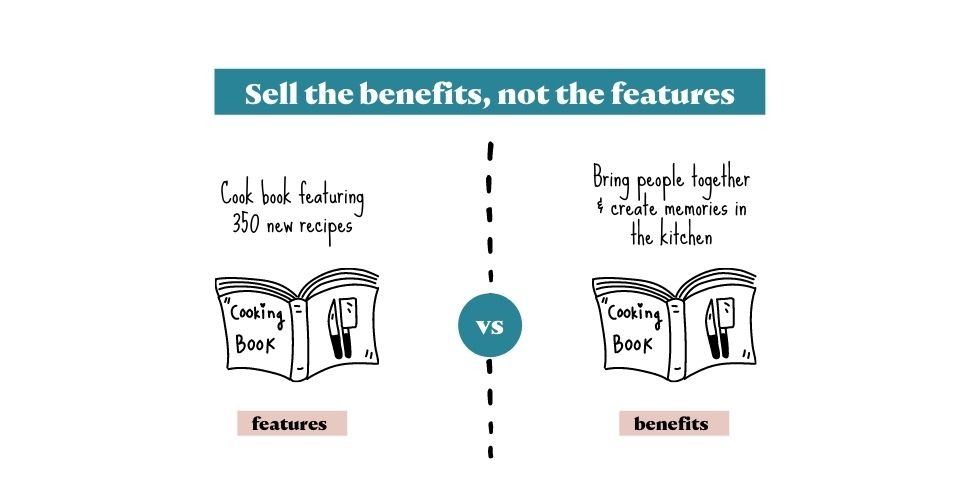
    I’m sure you’ve heard this one before. When writing for your website you’ve got to sell the benefits, not the features.

    Nobody cares that your app can do X, Y, Z functions. They want to know what that means for them in plain terms. 

    If your app can save them time, say that. Don’t say that it’s a “project management tool”.

    Selling a cookbook? Focus on how your book brings people together and creates memories in the kitchen… not that it has 350 new recipes.

    Fika Digital - copywriting tip - sell the benefits not the features

    Good copywriters are able to dig deep into your brand and identify the benefits of your services. Better yet, they’ll be able to talk about your brand in terms that your customers understand. 

    Remember: Sell the benefits, not the features

    Add a fresh, new perspective to your brand

    As a business owner, you know your brand inside and out. Which is great. But it can alienate your audience. 

    You’re in the thick of it. You know why your services are good. You want people to buy them. But, those goals and that level of knowledge can create a disparity between you and your audience.

    Bringing a copywriter on board adds a fresh, new perspective to your brand. They’ll be able to see things through the eyes of your customers and spot things that you might not notice. Rather than being solely focused on your business goals, they’ll know how to strategically blur the lines between your business goals and your audience’s needs.

    Plus, they’ll get away from jargon and cut through the technical language. They’ll talk to your customers like your customers.

    Enhance the organic visibility and SEO of your site

    You want your brand to appear on the first page of Google, right?

    Of course you do!

    Writing content for your website can increase your website’s organic visibility and search engine optimisation (SEO).

    But, you can’t just write any, old post and hope to appear on the first page of Google search results.

    You need to strategically create content that fulfills the exact search queries and challenges that your audience are facing. It’s about more than keywords. It’s about delivering value for your audience and becoming the go-to person. And those are all things that a good copywriter will be able to help you with.

    A good copywriter will be able to create a strong content marketing strategy that is focused on increasing organic visibility with the right people — your target audience.

    This content strategy will be focused on nurturing your audience along every step of their user journey, matching their intent as they move from awareness to conversion, all the way through to advocacy.

    When it comes to writing powerful blog articles for your brand, it’s better to hand your content marketing strategy over to an expert, rather than attempt to do it yourself.

    Save time

    Your time is valuable. Whether you’re a business owner wearing all the hats, or a marketing manager juggling every single channel, your time is valuable.

    Writing an amazing blog post that ticks all the right boxes, aligns with your audience, and brings results can be time-consuming. It requires research, writing, formatting, editing, uploading, promoting… A lot more than “just writing” goes into creating a successful piece of content.

    On the flip-side, spending 30-minutes bashing out a quick blog post and uploading it to your website is time wasted. It’s unlikely that it’ll harbour any true results for your business.


    Your best off handing blog writing over to an expert — to someone who intentionally carves the time out of their day to write thought-provoking and goal-driven content. You can then recoup those hours to spend time on other aspects of your business or… y’know, take some time off.

    Create high-quality content that achieves its goals

    When you hire a copywriter, you’re hiring an expert.

    You’re hiring someone who truly understands the power of creating high-quality content. They’ll know how to write content that is purpose-driven, not just content that’s written for the sake of it.

    So, take the guesswork out of your website copy and hire someone who knows what the heck they’re doing.

    Any good copywriter will understand how to tailor their content to specific user needs at each stage of the marketing funnel. They’ll be able to produce copy that aligns with user intent.

    User intent refers to the goal someone has in mind when performing an online search. This has several stages:

    • Informational
    • Navigational
    • Commercial
    • Transactional

    By understanding user intent, your copywriter will be able to write high-quality content that achieves its goals.

    You probably need to hire a copywriter

    Unless you’re somewhat of a content marketing pro, yourself, you probably need to hire a copywriter.

    Hiring a copywriter is a low-risk investment that can transform your business success. From saving you time to increasing conversions and enhancing organic visibility, the benefits of hiring a copywriter are unmistakable.

  • How often should you blog for your business?

    There’s a reason why so many businesses have a blog section on their website. Writing a blog can transform the online performance of your business. 

    You can leverage blogging to improve your organic search performance – helping to get your business seen by your target audience. Blogging can also help you to better connect with your audience. Building strong relationships with your audience increases the likelihood of them taking action.

    But, how often should you blog for your business? And how can you make sure that your blog writing efforts are producing lucrative results for your business?

    Lucky for you, we’ll be diving into the numbers behind how often businesses should blog and the anatomy of a good blog in this article…

    How often does your business blog right now?

    We’ve seen a lot of business blogs during our time. Many business blogs will have the odd business update once every few months as a cursory way of letting people know about your latest company news.

    Other companies will be on the ball sharing weekly or bi-weekly articles about topics that are loosely related to their business. Topics that on the surface seem relevant but as you dive deeper into them you realise there’s no clear direction or goal.

    On the flipside, you’ll have the business blog pro’s – the ones who are frequently publishing highly- relevant, targeted, and engaging blog articles. Articles that engage their audience and get them taking action at the end. These are the people who know exactly what they’re doing when they sit down to write a new article for their business blog. They’ve dotted the i’s and crossed the t’s when it comes to writing purposeful content.

    So, where does your business sit on the scale of blogging ghost (posting heedless blogs once every blue moon) to blogging pro (frequently posting strategic and purposeful content)?

    Take a moment to look at your current blog output and performance. Then carry on reading to find out how you improve upon what you are currently doing to captivate your readers, increase traffic, and improve your conversions.

    How often should you blog for your business?

    We know blogs are important for the online performance of businesses.

    Yet, when it comes to data, there’s very little information on how frequently you should be posting.

    The truth is – there is no definitive number out there for how often you should write blogs for your business. The truth is, it depends. It depends on your industry, the size of your company, the reason why you’re posting content, your content quality, the size of your marketing team… and many other reasons.

    We know you didn’t come here to hear “it depends”. So, we’ve done the research for you – we’ve scoured the big wide web and pulled together the numbers of how often you should blog.

    Publish more blogs to acquire more traffic

    General consensus says that you should be blogging 2 – 4 times per week to harness the highest possible results for traffic and conversions. The idea here is that the more frequently you publish blog posts, the more traffic you will acquire.

    However, this also depends on the quality of the posts you are publishing. If you are publishing content without giving any thought to the content topics or objectives, you likely won’t see any results.

    Hubspot found that companies that had published over 401 blog posts received 2x more traffic than companies with 301 – 400 blog posts.

    Fika Digital - How often should your business blog - total blog posts impact on inbound traffic

    Publish blog posts that are led by a thoughtful content marketing strategy and you will see a positive ROI in terms of traffic and conversions.

    In short: the more blogs you publish, the more traffic you will be likely to acquire for your website.

    However, the trick isn’t to just churn out blog post after blog post. It’s to produce content that is valuable for your audience. This means conducting thorough content marketing research and formulating a strategic plan of action for what content you’re going to produce, why, and when. This way, any content that you do publish will be highly relevant for your target audience… and will have a better chance of turning that audience into loyal customers!

    If you do want a number to aim towards, then aim to hit that sweet spot of publishing 2 – 4 quality blog posts per week.

    The proof is in the data

    Hubspot analysed blogging data from over 13,500 companies to try to gauge blogging frequency benchmarks. From their analysis, they were able to determine how blogging frequency can impact website traffic and conversions.

    They found that companies that publish 16 or more blog posts per month got 3.5 times more traffic than those who posted four or fewer articles per month. 

    Small teams may struggle to dedicate the time to frequently writing high-quality blog posts for their audience. In this instance, these teams should focus on strategically planning their blog content or outsourcing blog copywriting to help increase the production of quality, relevant blog articles.

    Blogging is just as important for B2B businesses as it is for those in the B2C vertical. 72% of B2B businesses have a blog, according to the Backlinko B2B Content Marketing Report. This content marketing report also revealed that long-form content performed best in the B2B space and that B2B decision-makers typically consume 13 pieces of content during the buying space.

    Writing a blog is not only good for positioning your brand as a thought leader, it’s also a crucial component of your customer buying journey. 

    The more articles you have on your website, the more information you will be able to provide potential buyers to assist them with their purchase decisions.

    What does a good blog look like?

    There’s more to blog-writing than just publishing blog articles. You need to consider all of the ingredients that go into that blog post. The anatomy of your blog post can be crucial to how well it performs online.

    Having written hundreds, if not thousands, of blog articles in our time, we’re pretty apt at knowing what it takes to write a great blog post. We’ve written posts that bring in thousands of site traffic per month, posts that convert readers into leaders, and posts that have secured rich snippets in Google Search Results. 

    But, we don’t want you to just take our word for it. So, we’ll be sharing the data that shows exactly what a good blog post should look like.

    Fika Digital - What does a good blog look like

    In their State of Content Marketing Report, SEMrush analysed the visits, backlinks and social shares of over 1,200,000 blog articles to determine which blog post elements such as the texts’ length, headlines, structure, and the presence of visuals had the biggest impact on content performance.

    Here’s what they found…

    Longer blog posts are better

    Long-form blog posts perform better than their shorter counterparts. It’s common knowledge that any blog post written for SEO purposes should be at least 400 words long.

    Long blog posts rank more easily on Google than short blog posts. Outside of the SEO benefits, long blog posts also offer your readers greater information and value than short blog articles.

    The State of Content Marketing Report found that long articles of approximately 3,000 – 7,000 word length received twice as many pageviews and 24% more shares than articles of an average length of between 900 – 1,200 words. This suggests that if you want to write content that’s shareable and keeps readers on your site for longer, you need to go long.

    Writing long blog articles doesn’t mean just waffling on to get that word count up. It means writing content that is valuable. Your long blog posts should be in-depth and informative. You need to make sure that every word counts which means having to strike that perfect balance between writing an article that’s concise while still being valuable.

    Having a complex blog structure wins

    When writing blog posts, you need to think about the formatting of your content. 

    Your blog post should never be a solid wall of text. It needs to have layers to it. As such, having a more complex blog structure wins. 

    Some key elements to consider when writing your next blog include:

    • Subheadings
    • Lists (like this one!)
    • Headline length

    We’ll look at each of these elements in more detail below…

    Use subheadings

    Your blog post should contain subheadings, such as H2, H3 and H4s to break up your text and add additional context to your blog post. Over half of posts that have a complex structure (i.e. contain H2/3/4 subheadings) are high-performing in terms of traffic and engagement.

    On the flipside, 39% of articles that have no structure at all (i.e. do not contain any subheadings) are low-performing in terms of traffic and engagement. 

    These statistics showcase the value of writing complex blog posts that contain multiple subsections (and subheadings). Going into more detail and breaking up long walls of text with subheadings can result in acquiring more traffic and engagement for your blog posts.

    Subheadings also make it easier for people to read your blog posts. They can easily skim-read your blog, picking out the key points and scanning for the information they are most interested in. 

    So, if you want to write blog articles that people actually want to read, make sure you’re using subheadings.

    Include lists

    Just like subheadings, using lists can also help make your blog posts easier on the eye.

    Using lists such as bullet points or numbered lists make it easier for your readers to continue their reading journey down the page, quickly and easily digesting information as they read your article. 

    Blog posts that contain at least one list every 500 words of plain text tend to receive 70% more traffic than blog posts that don’t contain any lists at all.

    Lists can improve the aesthetics of your blog post by adding white space to your article – helping to break up that daunting wall of plain text. 

    Ways you can use lists in your blog post include:

    • At the end of your blog post introduction to explain what your post will cover
    • In the middle of your blog post to break up large sections of text
    • When giving examples or suggestions
    • At the end of your blog post to summarise what was discussed or share suggested next steps

    Take a moment to go through some of your previous blog posts and see if there are any that could benefit from the addition of a list.

    Write longer headlines

    How much thought do you put into the headlines of your blog posts? Much like the cover of a book, your headline is your opportunity to peak readers interest and encourage them to click to read your blog post.

    Writing headlines that are 10 – 13 words long could drive twice as much traffic, and receive 1.5 times as many shares, than shorter headlines that are less than 7 words long.

    You only have a few seconds to catch the attention of your target audience. That means you only have a small window of opportunity to capture their attention with your headline.

    Longer headlines allow you to add more information to the title of your blog. They also allow you to add emotion and intrigue to your title by using adjectives or persuasive words.

    Let’s do a quick test.

    Which of the following blog post titles are you most likely to click to read:

    • Content marketing strategy guide
    • 7 steps to create the ultimate content marketing strategy for your brand

    We’re going to go ahead and guess that most of you said the second title “7 steps to create the ultimate content marketing strategy for your brand”. This title uses numbers which helps readers understand what to expect. It always describes the word as “ultimate” which adds emotion to the title and finally the headline ends with “for your brand” which makes it personal to the reader.

    So, there you have it! The longer and more descriptive your headline is, the more enticing it will appear to potential readers.

    Visual content is best

    Finally, blog posts need to be about more than just written words. They need to also include visual content.

    Adding an image to your blog post could double your blog post traffic. The content marketing report from SEMrush found that posts containing one image received twice as much traffic as posts that only contain text. Blog posts with images also get 30% more shares and 25% more backlinks. 

    When writing a blog post, make sure it at least contains one featured image to accompany the text.

    Including more images throughout your blog has the potential to further increase your traffic with posts containing 7 or more images being more likely to gain four times more traffic than articles with just text. 

    While we wouldn’t recommend peppering your blog post with lots of images, we do recommend using them strategically throughout your blog to accompany text, provide additional context or add visual cues. 

    If you thought images were enough, think again. Blog posts without video receive 92% less traffic and 24% less shares than blog posts that contain at least one video. Therefore, you might want to think about introducing explainer videos into some of your upcoming blog posts. These could be, for example, walk-through videos showing how something is done or they could be informative and educational videos that are then transcribed into a blog post. 
    These videos could also be repurposed for other platforms such as YouTube or Instagram videos.

    Final thoughts on how often you should blog

    While it is important to be frequently publishing blog posts for your business, it is more important to produce blog posts that are high-quality.

    Try to get into the rhythm of publishing regular blog posts. This can be achieved by developing a content marketing strategy and producing a schedule of upcoming blog topics that you want to publish. By doing this, you will be able to hold yourself accountable to publishing frequent blog posts.

    Alternatively, if blog-writing isn’t your thing or you don’t have time to write blogs for your business, you can outsource your blog writing to a content marketing team. At Fika Digital, we help businesses create purposeful blog content that engages their ideal audience and performs well organically.

    Along with frequently publishing blog posts, you need to consider how your blog looks. Take time to work on your blog structure and find ways to make that blog post more appealing to readers.
    If you need help with auditing your existing blog posts or creating a plan of action for future blogs, get in touch to see how we can support you.

  • Instantly improve your business blog with these simple tips

    There’s a reason why there are over 500 million active blogs around the world. It’s because it works. If you want to get more eyes on your business, a blog is one way you can achieve just that. 

    The benefits of blogging don’t just stop at expanding your reach. Blogging can also increase audience engagement, help you gain more leads, and improve your bottom line. Businesses that prioritise blogging receive 13X more ROI than those that do not.

    Sounds appealing, right?

    Then it’s time to dust off your business blog and give it some much-needed love. In this article, we’re sharing some simple tips to help you polish up the performance of your business blog.

    Fika Digital - simple tips to instantly improve your business blog

    Sit down, relax and let’s learn how you can instantly improve your business blog…

    Instantly improve your business blog

    Writing a blog is easy. Writing a blog that generates powerful results for your business takes careful consideration. It’s an art. It requires research, experience, and skills.

    The best way to improve your business blog is to outsource your content marketing and copywriting to an experienced content marketing team who will know exactly how to develop a winning content strategy for your business. 

    The second best way to improve your business blog is to follow these simple tips to start improving your blog today:

    Choose your content topics

    Before you even begin writing a business blog, you need to define your content topics. These topics will inform what gets published on your blog. 

    The content topics you choose need to be relevant to your business, audience and goals.

    When choosing content topics for your blog, first ask yourself:

    • Who am I writing this for? 
    • What do I want to achieve with this blog?
    • How does this blog relate to my business?

    The answers to these questions will help you identify your content topics. You may have several topics that you want to write about on your business blog. However, the more focused these topics are, the more successful your blog posts will be. 

    It’s important to note that not every content topic that interests your audience will be relevant to your business, and not every content topic that is relevant to your business will be interesting to your audience. It really is important to strike that balance and find the content topics that appeal to your business goals, your audience and your company.

    Content pillars and cluster content

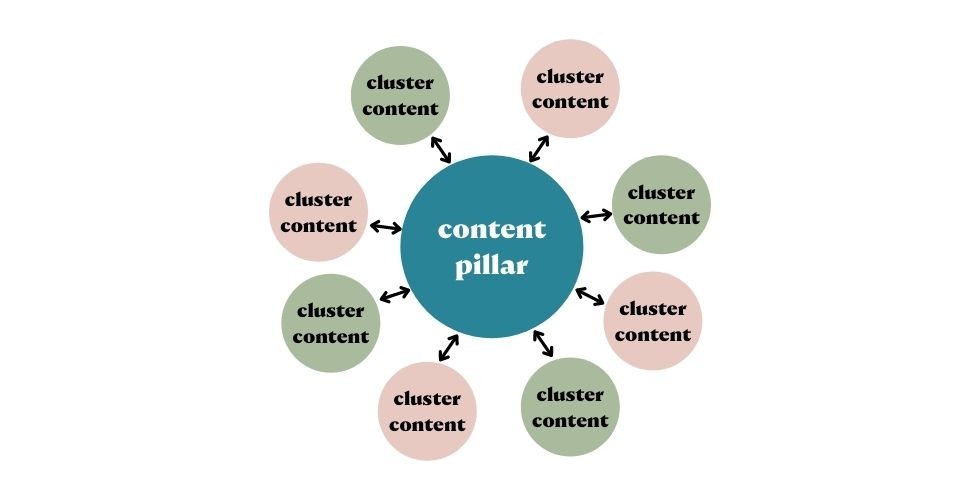
    Once you have chosen your content topics. You may then be able to distil these down into subtopics. These main content topics will be your ‘content pillars’ and the smaller subtopics will form your supporting content, also known as cluster content.

    Instantly improve your business blog - content pillars and cluster content

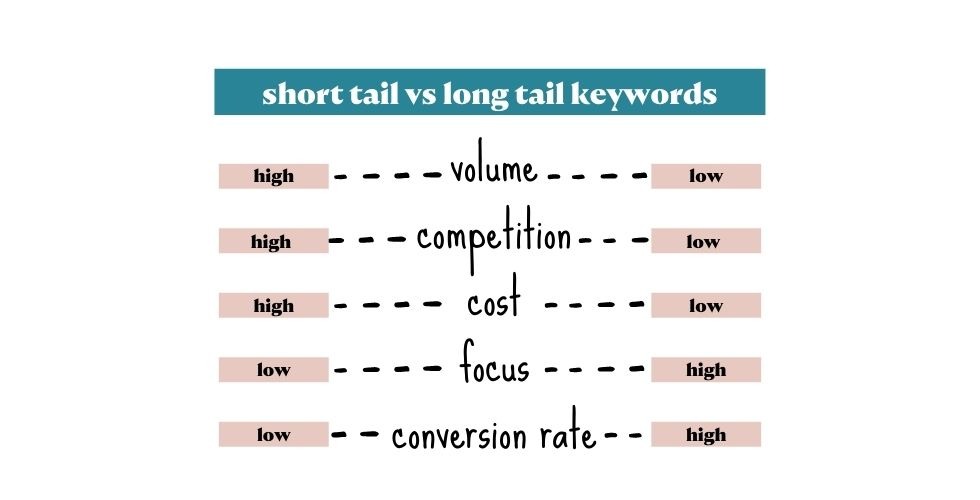
    Your content pillars should be aligned with high-value, short-tail keywords. This means that they are broad keywords that are highly relevant to your business (high-value keyword) and that receive a high number of monthly searches in search engines results (short-tail keyword).

    Your chosen topics for your cluster content will help add context to your content pillars. For example, if SEO is your content pillar then your supporting cluster content may be SEO tips for beginners, how to do SEO, SEO tools.

    After you have completed this exercise, you will likely have a number of content pillars and cluster topics for your business. These topics will help inform your upcoming business blog posts.

    Establish your tone of voice

    Your tone of voice helps your audience understand what kind of business you are. Are you a serious and professional business? Or are you innovative and fun? 

    Whatever your tone of voice is, it needs to be consistent across all elements of your business — from your website to your sales documents, printed brochures, emails, social media messaging, and so on.

    Your tone of voice isn’t about what you say, it’s about the way that you say it. So, you need to choose your words carefully when writing your business blog to make sure it perfectly captures your brand personality.

    If you don’t already have a tone of voice document, the best way to establish your tone of voice is to speak to your audience, listen to your employees, and think about what your business stands for.

    From here, you’ll be able to establish a tone of voice that perfectly represents your brand. Then, every time you write your business blog, make sure you are channelling your brand tone of voice.

    This will help you to build trust with your readers by having a familiar, consistent voice. It can also be beneficial for helping readers to identify your brand without even seeing your logo or business name – they should be able to read your blogs and instantly know that it’s you.

    Finally, your tone of voice can be a powerful tool for encouraging readers to take action. As we said earlier, tone of voice is all about the way you say things. And the way you say something can evoke certain emotions in your readers and listeners.

    Prioritise keywords and search intent

    Everything you write needs to be written with intent. Specifically, everything you write should be written with search intent.

    Search intent, also known as user intent, refers to the primary goal a person has when searching for something using Google (or other search engines). Whenever someone searches for something online, they are usually looking for a particular answer – be it a recipe, an FAQ, a product, a video, or something else entirely.

    By prioritising keywords, you can also take steps towards prioritising search intent. 

    Firstly, you need to do keyword research for your website. Keyword research will help you identify key content topics (that relate to your content pillars and cluster content!) for upcoming blog articles. 

    You can then reverse engineer these keywords in Google to see what types of content appear in the search engine result pages (SERPs). This will help you to determine whether these keywords are relevant to your business and what type of content you should produce in order to secure the top spot for this keyword. Doing this will also help you to prioritise search intent when doing keyword research for your blogs.

    Side note: make sure the content you produce is unique and doesn’t plagiarise another website.

    When doing keyword research, keep your content pillars and cluster content in mind. If the keyword has a high search volume (e.g. a search volume of 3,900) this may be best used as a content pillar with supplementary cluster content created for related long-tail keywords.

    As a general rule, your blog posts will most often be written for long-tail keywords. Short-tail keywords, on the other hand, will most likely be used for landing pages or for content pillar pages.

    Instantly improve your business blog - short vs long tail keywords

    Your keywords should appear naturally in your blog post. Overstuff your blog post with keywords and it will look unnatural to both readers and Google. Instead, choose one main focus keyword for your blog post and aim to use this naturally throughout your blog.

    You should also use semantically related keywords within your blog, along with some longer-tail supporting keywords to help further build the relevance of your blog for your chosen keyword.

    Remember to use your keyword in the following areas of your blog post (where it fits naturally):

    • Page title (usually the H1)
    • Subheadings
    • Main body of text
    • Media alt-text, filename and meta-data
    • Blog post meta-data

    Optimise images and videos

    Sure, content is king. But visual content is where it’s really at. 

    When you think of a blog post, you likely will think of a long piece of written content. However, the best types of blog posts are the ones that incorporate visual elements such as images and videos.

    Images and videos help break up the text, add relevance and keep readers engaged.

    Articles with images can gain up to 94% more views than articles without any visuals. So using images and videos in your blog posts is a bit of a no-brainer.

    In order to get the most out of your blog post images and videos, you need to optimise your visuals for SEO and on-site performance. 

    Large media files can play havoc with your website loading time – an important factor for on-site SEO. Before uploading any media files to your website, make sure they are low file sizes. Large image files can slow your website down. 

    To optimise your images for your blog, you should focus on:

    • Image file format (JPEG, PNG, GIF, etc.)
    • Compression
    • Image dimensions

    Choosing the correct format for each of the above can help reduce your image size and, in turn, could have a positive effect on your page speed and SEO.

    JPEG is often the best file format to use for blog post images as they allow you to reduce the file size without overly compromising the image quality. If you plan to upload an image with a transparent background, you should opt for PNG. GIFs are best used for animated images.

    You can also use plugins to compress existing website images.

    As for image and video dimensions, make sure you choose an aspect ratio that is suitable for your blog. The file dimensions do not need to be as big as the file dimensions you may need for print-use. So, you should reduce the file dimension to a size that is more appropriate for your blog such as 1200 x 630 pixels or 600 x 600 pixels.

    Break up large walls of text

    Nobody enjoys reading massive walls of text. When faced with a large plain wall of text, we find ourselves skim-reading, skipping from point to point and tuning out from the article in front of us.

    But break that text up into short, snappy paragraphs. Mix up your sentence length. Or add in some bullet-points, subheadings and images, and you’ve got people hooked.

    In short, break up large walls of text and you will keep readers engaged.

    We recommend trying to keep your paragraphs concise so they are easier to read. To do this, try to stick to no more than 4 sentences per paragraph. If it feels like a paragraph is getting too long, break it up!

    Other ways to break up large walls of text in your blog posts include:

    • Use subheadings
    • Add images or videos
    • Use bullet points or numbered lists
    • Add quotes with different text-formatting to make key information stand out

    These blog post formatting changes will work wonders for helping keep your readers engaged with what you’re writing. They will also make it easier for readers to digest your blog post and pick out the information that matters most to them.

    Tie your blog in with your wider marketing plans

    Your blog post should never, ever be written in silos.

    Anytime you write a blog post for your business website you should be asking yourself “how does this blog post fit into my wider marketing and business plans?”

    Whenever you write a business blog post, you should make sure that blog post has a clear goal (view mistake #1 in this list of content marketing mistakes). That goal should be related to what you want to achieve with your blog post and what action you want people to take after reading your blog post.

    You should also make sure your blog post fits into your other marketing activity. If you are writing a business blog post, consider how you can further amplify that blog post through your other marketing channels. Include your new business blog post in your upcoming email marketing newsletter, share it on your social media pages, repurpose it for a podcast, add it as a sitelink extension to your related Google Ads, and so on.

    Outside of marketing, you should also tie your blog post in with your wider business activity. For example, you should also share your latest business blog post with your Sales team so they can pass it on to customers/clients.

    You can also review your marketing and business objectives and activities and consider how you can write new blog posts that relate to these objectives/activities.

    Include internal links in your blog posts

    Links make the world go round. Seriously, writing a blog post isn’t enough. You also need to include links.

    Thing about the business blog posts you’ve previously published – did you include internal links in these? Did you point readers to related blog posts, pages or services? If not, you could be missing out on some great opportunities.

    Including internal links in your blog posts helps readers find related content or products/services. Internal links also help Google to better understand which on-site content is related which, in turn, helps Google to better rank your website.

    As a general rule, you should try to link your blog posts for your cluster content to the blog post or page for your content pillar. This will tie these related topics together and strengthen your search performance for keywords related to this content pillar.

    Internal links help Google understand the structure of your blog whilst also helping your website visitors to easily navigate to the pages and information that interests them.

    Don’t forget your call-to-action

    I know I’ve said it a lot throughout this blog post, but every blog post needs a call-to-action (CTA). Whether than overt CTA in the form of a button or an email newsletter widget or a more covert CTA such as to build engagement or encourage readers to read another blog post.

    One of the most popular ways to feature a call-to-action in your blog post is to have a CTA at the end of your blog post. This gives you a clear space to encourage readers to take action after finishing your blog post.

    This could be a call for them to get in touch, to connect with your business on social media, or to download your latest eBook and sign up to your mailing list.

    Your call-to-action should be related to the blog post it features in. For example, a veterinary centre writing a blog post about dog dental care wouldn’t include a CTA that targets cat-owners. 

    Adding your call-to-action links back to making sure your blog is written with intent. If you aren’t encouraging people to take action, you could be missing out on connecting with some amazing customers and clients.

    Finally, don’t overcomplicate it. Sticking to one call-to-action will be far more impactful than having multiple calls-to-action in your blog post.

    Instantly improve your business blog: takeaway thoughts

    If you’ve got this far, we hope you have learnt some simple tips for how to instantly improve your business blog. And, if you haven’t done so already, we recommend making some notes based on this blog post.

    Next time you write a blog post for your business, stop and think about the tips included in this blog post. Then, consider how you can use these simple blog tips to improve your next blog post.

    If you need help with improving your blog post, or if you would like personalised one-to-one content marketing training, get in touch to find out how we can help

    At Fika Digital, we are committed to helping your business shine online. We can help you turn your blog posts into high-quality purposeful content that encourages your readers to take action today. 

  • 7 Content Marketing Mistakes Your Business Is Making

    Writing a blog is easy. You sit down at your computer, fuelled by a spark of passion and creativity, and begin to write. Then you cast your eyes back over your wordy masterpiece, hit publish and sit back waiting for the views to come rolling in.

    But wait.

    Writing content isn’t always that easy. 

    In order to create content that consistently produces results for your business, you need a solid content marketing strategy.

    Blog - Content Marketing Mistakes Your Business Is Making

    Creating blog posts and social media content on a whim can be great when you’re just getting started. But this type of content planning will only get you so far.

    To help you start creating content that serves your audience and your business, let’s begin by looking at the content marketing mistakes your business is making right now, or that you want to avoid making in the future.

    Before we dive into the content marketing mistakes to avoid, we first want to hold our hands up and say that we’re also guilty of making these mistakes from time to time. Nobody is perfect. We all make mistakes.

    But the trick is to be aware of the mistakes you are making so that you can recognise them, rectify them and stop them from being made again in the future.

    Writing for the sake of writing

    The number one mistake that we see small businesses making when it comes to content marketing is this: writing for the sake of writing.

    You know you need to write content for your business. But you don’t know the reason why you need content or which content it is you need. In turn, you will just create content for the sake of it.

    The result? You will end up with a blog, social media channel, newsletter or podcast that is filled with high-quantity and low-quality content.

    Churning out content can sometimes be counterproductive for your business. Especially if you are churning content out without a strategic plan to inform your content creation. 

    Content strategy is the backbone of content marketing. You need to understand the ‘why’, ‘how’ and ‘who’ behind your content before you start writing. By doing this, you can make sure that you are creating purposeful content that people want to read. 

    More importantly, you can create content that inspires your audience to take action.

    Thinking content marketing means just writing blog posts

    Did you know that your content marketing strategy is about more than just writing blog posts?

    By now you’re probably all too familiar with the phrase ‘content is King’. However, it’s easy to fall into the trap of thinking content is King = blog posts are King. This isn’t true at all.

    The real secret is knowing that content variety is King. If you are guilty of having a one-track mind when it comes to creating content for your brand, it’s time to get off the single content marketing treadmill and onto the content marketing field.

    Content marketing can include:

    • Blog posts
    • Whitepapers
    • eBooks
    • Webinars
    • How-to guides
    • Checklists and listicles
    • Podcasts
    • Short-form videos
    • Long-form videos
    • Memes (yes, really!)
    • Social media posts
    • GIFs
    • Infographics
    • Case studies
    • Animations
    • Live videos

    It’s time to move beyond the blog post and start thinking about what other types of content would appeal to your target audience. From here, you want to make sure your content marketing strategy incorporates each of these content types.

    Remember, you don’t always have to reinvent the wheel every time you create new content. You could write a long-form blog for your website and then think about the ways you can repurpose this written content to create organic social media posts, short-form videos and other types of content for your brand.

    Focusing on sales

    As a business owner, sales are your number one priority. Without sales, you won’t have a business. But that doesn’t mean that everything you do has to be done with the sole objective of directly increasing sales.

    It is important to remember that not everybody you speak to is ready to purchase. Think about how it makes you feel when someone approaches you in the street and instantly starts trying to sell something to you. Chances are you find it insincere or annoying and you might be quick to escape them. 

    Now, think about how you feel when someone approaches you in the street to offer you a free product. We’re going to guess that you walk away with a smile on your face and a free treat in your hand. This is because they have offered you something of value for free. You will then be more likely to think of this person/brand when you are ready to buy this type of product in the future.

    It’s all about playing the long game.

    You need to create content that meets your audience at every stage of the customer funnel. This means that it is important to produce content that offers value for your audience without expecting them to take a sales-based action in return.

    Recent research shows that only 66% of content marketing strategies prioritise the informational needs of their audience over the organisation’s sales message. Yet, 88% of the top content marketing performers do put audience needs above their sales message.

    Instead of focusing on sales (bottom of funnel content), make sure you are focusing on creating content that serves customers at all stages of the customer journey. This includes creating informational and educational content for customers in the top and middle funnel stages of their customer journey.

    Not having a dedicated person for content marketing

    Being a business owner often means wearing multiple hats at once. One of the hats you may find yourself wearing is the hat of a marketing professional or content writer. 

    Writing content is a specialised skill set that requires the writer to reshape technical information into something that appeals to the targeted audience. 

    A strong content writer will be able to produce data-informed content that is relevant, meaningful and beneficial to their audience. They will also understand what keywords to use, how best to present the information, and what the desired goal of each piece of content will be.

    Can you effectively write purposeful and results-focused content for your business if your focus is split across several key areas of your business? The sad truth is, probably not. 

    Please know that I am saying this from a place of experience (as the owner of an agency) and a place of kindness (as a fellow business owner). In the early days of business ownership, you will need to juggle various responsibilities and tasks to help get your business off the ground.

    However, this presents another challenge for your business. Being stretched thin across multiple disciplines within your business can make it harder for you to generate powerful results from each of those individual disciplines.

    This is where the power of outsourcing comes into play. Building a team of specialists where each member of your team has a specific focal area will help you harness greater results for your business. Whether you choose to hire internally, work with a partner agency or outsource  work to a freelancer is entirely your choice. 

    Almost one-third of companies (32%) lack a full-time person dedicated to content marketing, while this number drops to 13% when looking only at the top content marketing performers – according to research by Content Marketing Institute.

    Further findings showed that 50% of all respondents outsource at least some of their content marketing. Content creation topped the list of outsourced content marketing activities for all respondents (84%). This shows that many businesses recognise the value in outsourcing their content to a specialised team.

    Only using owned media

    The easiest way to create content as a business owner is to publish that content on the channels you already own. Most business owners or internal marketing teams will produce content for their email newsletter, their website and their brand social media channels.

    Content produced for these types of platforms is known as ‘owned media’. Owned media refers to using channels that you have control over. These channels make it easy for you to get your content out into the world for your audience to see.

    However, only using owned media is one content marketing mistake that can limit your reach. 

    Making use of earned media channels can be a powerful way to extend your reach and get even more eyes on your business than ever before. As such, it is important that your content marketing strategy looks beyond owned media. You should also make plans to include earned media channels such as guest posting for other publications, speaking at events or on podcasts, and engaging influencers or media publications in marketing campaigns.

    Research showed that the top performers in content marketing are more likely to amplify their content using earned media channels including:

    • Media/influencer relations (46% of top performers vs. 34% of all)
    • Guest posts/articles in third-party publications (63% vs. 48%)
    • Speaking/events (70% vs. 63%)

    Along with owned and earned media, it can also be worthwhile considering how paid media can form part of your content marketing strategy. Paid media refers to advertising channels including Google Ads and paid social media. 

    Findings from the above-mentioned research also revealed that 84% of respondents had used paid media channels in the last 12 months. Among those who use paid methods, 72% said they used paid social as part of their content marketing strategy. 

    So, if you are guilty of only distributing content through owned media, take this as your signal to start exploring the world of earned and paid media.

    Expecting instant results

    Content marketing is a business investment, not a get-rich-quick scheme. Unless you already have a large audience, content marketing won’t produce immediate results for your business.

    Content marketing requires effort and investment. It can take months before you start to see the results from the content you have produced. The more time and effort you invest in content marketing, the more your traffic, revenue and customer loyalty will grow. However, this growth won’t happen instantaneously.

    Research by Hubspot found that companies that publish 16+ blog posts per month get 4.5x more leads than those that only publish 0-4 articles per month. However, it is key to remember that content marketing is about more than content quantity.

    The quality of your content will also influence how it performs. You need to develop a dedicated content marketing strategy that is focused on reducing guesswork and increasing performance. Having a content marketing strategy that is focused on both SEO and your audience will enable you to create content that produces consistent, long-term results for your business.

    Not measuring performance

    If you write blog posts, publish social media posts or send emails and never look at them again, you could be missing out on some valuable insights.

    Measuring the performance of your content marketing activity is the best way to understand what is and isn’t working for your audience. With these insights, you can learn what you need to do more of in order to succeed, along with knowing what content tactics need finetuning.

    If you aren’t measuring the performance of your content, then you’re not alone. It seems there are a few business marketers out there who are missing out on the powers of performance analysis. In fact, only 43% of B2B marketers say they measure ROI and 65% have established key performance indicators (KPIs). Meanwhile, 67% of the top performers evaluate ROI and 83% monitor KPIs.

    So, if you want to be a top performer when it comes to content marketing, it’s time to start measuring performance.

    In order to measure performance, you first need to make sure you have content marketing goals in place. 

    Don’t have any content marketing goals? Then let’s just say that’s another bonus mistake you just might be making. Go back to mistake #1 “Writing for the sake of writing” and think about your why

    Why are you creating content? What do you want that content to achieve? Your answer to why should, in part, inform you of your content marketing goals.

    Once you have your goals in place, develop the key metrics that you need to analyse in order to determine performance. You can then measure the performance of your content marketing activity against your content marketing goals AND your wider business goals.

    By doing this, you will be able to demonstrate the ROI of your content marketing activity and you will also be able to figure out what changes to make going forward to ensure improved performance in the long run.

    Content Marketing Mistakes: You’re not alone

    How many of the content marketing mistake boxes did you tick? Zero, one,… all seven? 

    Don’t worry! If you have been making any of the above content marketing mistakes, the good news is that there’s still time to rectify things. Take your learnings from this article and get to work improving your future content marketing activity.

    We all make mistakes. The important thing is to make sure we are learning from our mistakes. 

    If you’ve read this article and realise you could benefit from having a content marketing specialist to help you review your activity and advise on how to create content that shines online, we are here to help.

    Contact us to find out about our content marketing training opportunities or to enquire about handing your content marketing activity over to our specialist and dedicated team.